

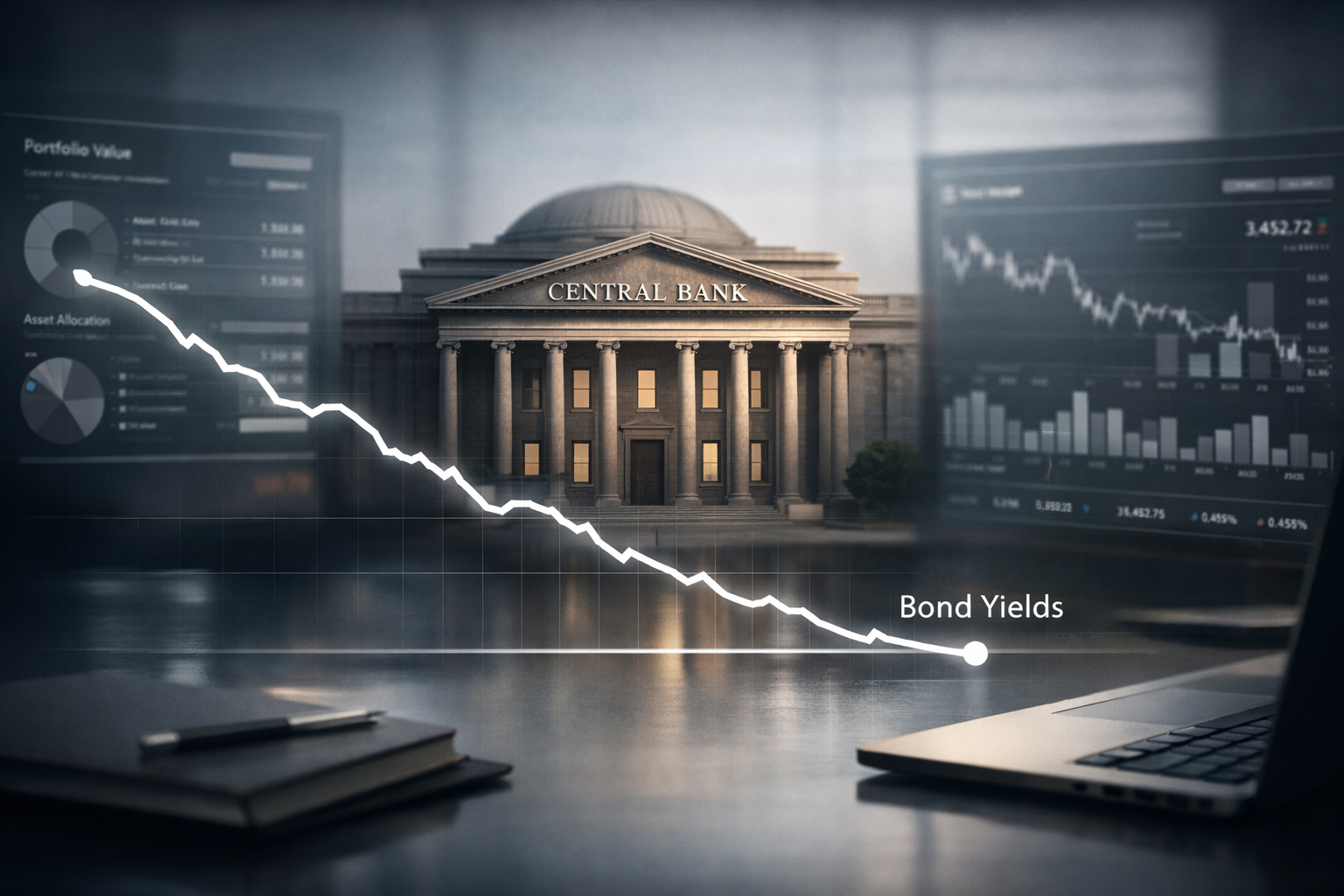
Quantitative easing (QE) exerts a profound influence on long-term bond yields, fundamentally altering how investors perceive risk and allocate capital. By directly suppressing yields through large-scale purchases of government debt, QE reshapes the investment landscape, prompting shifts in portfolio strategies and market behavior. For investors and policymakers alike, grasping this dynamic is essential—not only to interpret current market signals but also to anticipate the ripple effects on asset prices and risk-taking.
The Mechanism of Quantitative Easing and Its Direct Impact on Long-Term Bond Yields
At its core, quantitative easing involves central banks buying long-term government bonds in significant quantities. This intervention increases demand for these securities, pushing prices up and yields down. Unlike traditional monetary policy tools that adjust short-term interest rates, QE targets the longer end of the yield curve to influence borrowing costs over extended horizons.
The supply-demand imbalance created by QE is straightforward: as the central bank absorbs a large share of outstanding bonds, fewer remain available to private investors. This scarcity bids up bond prices, compressing yields. Lower yields reduce the cost of long-term borrowing for governments and, by extension, can stimulate broader economic activity.
Beyond the mechanical effect, QE sends a powerful signal about the central bank’s intentions. By committing to bond purchases, the central bank implies that short-term rates will remain low for an extended period and that inflation is expected to stay subdued or rise gradually. This signaling effect further anchors long-term yields at lower levels, as investors adjust their expectations accordingly.
QE’s focus on long-term bonds rather than short-term instruments reflects a strategic choice. Short-term rates are more directly controlled through policy rates, but long-term yields incorporate expectations about future growth, inflation, and monetary policy. By targeting long-term bonds, QE influences these expectations and the broader financial conditions that affect investment and consumption decisions.
How Lower Long-Term Yields Reshape Investor Behavior
When QE drives down long-term yields, it effectively reduces the income investors can earn from traditionally safe assets. This shift nudges investors to reconsider their risk-return trade-offs. The immediate consequence is a dampened appetite for low-yielding government bonds and a growing search for higher returns elsewhere.
This “search for yield” phenomenon often leads investors into riskier asset classes such as equities, corporate bonds, and real estate. The compressed yields on government debt make these alternatives comparatively more attractive, despite their higher credit or market risk. Investors may extend portfolio duration, taking on longer maturities to capture incremental yield, or increase exposure to lower-rated credit instruments.
Behaviorally, this environment can foster complacency. The persistent presence of central bank support may cause investors to underestimate the risks embedded in their portfolios, assuming that yields will remain suppressed indefinitely. This underestimation can lead to crowded trades and overconcentration in certain sectors or asset classes, raising vulnerability to sudden market shifts.
The Feedback Loop Between QE, Bond Yields, and Market Sentiment
QE’s impact on bond yields does not operate in isolation; it interacts dynamically with investor expectations and market sentiment. As yields fall, investors’ willingness to chase yield can reinforce demand for riskier assets, which in turn supports asset prices and bolsters confidence. This creates a self-reinforcing cycle where low yields encourage risk-taking, which sustains market momentum.
Investor expectations about the persistence of QE play a critical role. If markets believe central banks will maintain or expand QE programs, the suppression of yields becomes a stable condition, encouraging further risk-taking. Conversely, any hint of tapering or reversal can trigger rapid repricing, as investors rush to adjust portfolios in anticipation of higher yields and tighter financial conditions.
This feedback loop can distort price discovery. With central banks as dominant buyers, market liquidity may thin, and prices may reflect policy-driven demand more than fundamental credit or economic conditions. When QE ends or reverses, the sudden withdrawal of support can amplify volatility, exposing portfolios to sharp yield spikes and valuation corrections.
Realistic Investor Scenario: Navigating Portfolio Strategy Amid QE-Driven Yield Changes
Consider a conservative pension fund manager facing a prolonged QE environment. The fund’s traditional allocation to long-term government bonds, once a reliable source of steady income and capital preservation, now yields significantly less. The manager confronts a dilemma: maintain the status quo and accept lower income, or adjust the portfolio to meet future liabilities and return targets.
After careful analysis, the manager opts to extend duration modestly, buying longer-maturity bonds to capture slightly higher yields while accepting increased interest rate sensitivity. Simultaneously, the fund increases exposure to high-quality corporate bonds, balancing the search for yield with credit risk management. To diversify further, the manager allocates a portion to real estate investment trusts, seeking income streams less correlated with bond yields.
However, the manager remains cautious. The low-yield environment and central bank dominance create uncertainty about future yield spikes. As a result, the fund maintains liquidity buffers and sets clear risk limits to avoid overexposure. The manager’s experience includes moments of hesitation—wondering if the portfolio is too conservative or too aggressive—but ultimately prioritizes resilience over chasing incremental yield.
Common Misconceptions and Mistakes Regarding QE’s Impact on Bonds and Investor Behavior
A widespread misconception is that QE permanently suppresses yields without risk. In reality, QE’s effects are conditional and reversible. Investors who assume yields will stay low indefinitely may be caught off guard by sudden market adjustments when QE tapers or ends.
Another error is believing QE guarantees positive returns in bond markets. While QE can support prices in the short term, bonds remain subject to interest rate risk, inflation surprises, and credit events. Overreliance on central bank support can lull investors into complacency, neglecting fundamental risk assessment.
Ignoring inflation risk is particularly dangerous. QE’s expansion of the monetary base can eventually fuel inflationary pressures, pushing yields higher and eroding fixed income returns. Investors who fail to anticipate this risk may face painful losses when yields spike.
Finally, many investors mistake QE-driven market conditions as a green light to chase yield aggressively. This behavior can lead to crowded trades, poor diversification, and vulnerability to abrupt market reversals. Maintaining disciplined risk management is essential even when central banks appear to backstop markets.
Practical Takeaways for Investors Facing QE-Influenced Bond Markets
- Monitor central bank communications closely: Understanding the trajectory of QE programs helps anticipate shifts in yield trends and market sentiment.
- Manage duration risk thoughtfully: Extending duration can enhance yield but increases sensitivity to rate changes; balance is key.
- Diversify credit exposure: Incorporate high-quality corporate bonds and alternative income sources to mitigate reliance on government debt yields.
- Maintain behavioral discipline: Resist the temptation to chase yield blindly; evaluate risk-return trade-offs rigorously.
- Prepare for volatility: Build liquidity and set risk limits to navigate potential yield spikes or policy shifts without forced selling.
Conclusion
Quantitative easing reshapes the fixed income landscape by directly suppressing long-term bond yields and triggering profound shifts in investor behavior. This dynamic alters risk perceptions, portfolio allocations, and market sentiment in ways that demand careful attention and disciplined response. Investors who understand the mechanisms behind QE’s influence can better navigate the trade-offs between income, risk, and diversification in an environment where central bank actions loom large. Ultimately, recognizing that QE’s effects are powerful but not permanent equips investors to make more informed, resilient decisions amid evolving market conditions.