

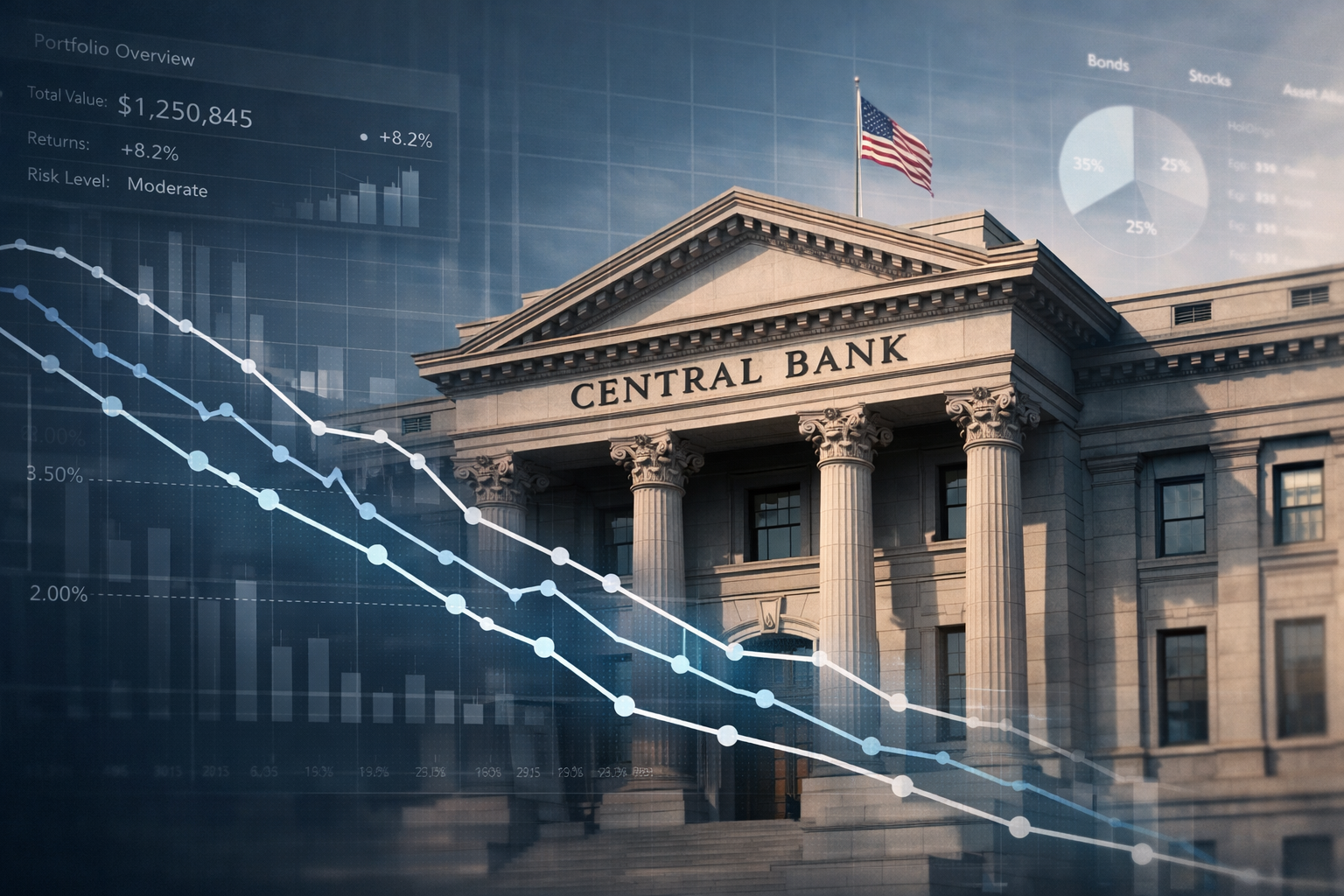
Quantitative easing (QE) has become a central tool for central banks in developed economies, especially during periods of economic stress. Its influence on long-term bond yields is a nuanced subject that directly affects investors’ fixed income strategies and portfolio construction. Understanding how QE shapes these yields is crucial for disciplined investors seeking to navigate bond markets with clarity and confidence.
How Quantitative Easing Affects Long-Term Bond Yields
At its core, quantitative easing involves central banks purchasing long-term government bonds and other securities to inject liquidity into the financial system. By doing so, they increase demand for these bonds, which tends to push prices up and yields down. This inverse relationship between bond prices and yields means QE generally exerts downward pressure on long-term bond yields.
But the story doesn’t end there. The mechanism works through several channels:
- Portfolio Rebalancing: When central banks buy large quantities of long-term bonds, investors who sold those bonds receive cash and often seek alternative assets, pushing yields lower across the curve.
- Signaling Effect: QE signals a commitment to low interest rates for an extended period, which influences market expectations and reduces term premiums embedded in long-term yields.
- Liquidity and Risk Appetite: By increasing liquidity, QE can encourage investors to take on more risk, further compressing yields on safer government bonds.
These forces combine to create a sustained environment of lower long-term yields, which can last well beyond the active phase of QE purchases.
Investor Implications: Why This Matters in Practice
For investors, the impact of QE on long-term bond yields is more than an academic curiosity. Lower yields mean reduced income from bonds, which can challenge traditional fixed income allocations designed to provide steady cash flow. At the same time, lower yields often translate into higher bond prices, offering capital appreciation potential if yields decline further.
However, this dynamic can create a dilemma. Investors who enter the market during or after QE-driven yield compression may find themselves locked into low income streams, with limited upside if yields remain near historic lows. This can lead to second-guessing or regret, especially if inflation expectations rise or central banks signal tapering of asset purchases.
Consider a hypothetical investor, Emma, who increased her allocation to long-term government bonds during a QE program, attracted by the rally in bond prices. Months later, as central banks hint at reducing QE, Emma hesitates, worried about potential yield spikes that could erode her bond holdings’ value. This tension between chasing yield compression and fearing yield normalization is a common behavioral friction in such environments.
The Trade-Offs and Common Misconceptions
One frequent misconception is that QE permanently suppresses long-term yields. In reality, QE’s effect is significant but not infinite. Market forces, inflation expectations, and economic fundamentals eventually reassert themselves. Investors who assume yields will stay artificially low indefinitely may underestimate the risk of rising rates once QE tapers or ends.
Another subtlety is the role of term premiums—the extra yield investors demand for holding longer maturities. QE tends to reduce term premiums by anchoring expectations and reducing uncertainty, but these premiums can fluctuate with changing economic conditions, sometimes offsetting QE’s downward pressure.
Understanding these trade-offs helps investors avoid overconfidence in QE’s ability to keep yields low and encourages a more balanced view of fixed income risk and return.
Systematic Investing as a Response to QE-Induced Market Dynamics
Given the complexity and emotional challenges QE introduces, some investors turn to rule-based or systematic investing approaches. These predefined systems help remove guesswork and emotional reactions to shifting bond yields and central bank policies. By following a disciplined framework, investors can maintain consistent exposure aligned with their risk tolerance and investment goals, rather than reacting impulsively to market noise.
Platforms like Algo offer examples of how systematic strategies can be implemented to navigate environments influenced by QE, helping investors stay focused on long-term objectives despite short-term volatility.
Curious how these ideas play out in real portfolios? The interplay between QE and bond yields often reveals itself in subtle but impactful ways over time.
Conclusion: Navigating Long-Term Bond Yields Amid Quantitative Easing
Quantitative easing exerts clear downward pressure on long-term bond yields in developed economies by increasing demand, signaling prolonged low rates, and enhancing liquidity. For investors, this means lower income potential but also opportunities for capital gains if yields fall further. The challenge lies in recognizing that QE’s influence is significant but not permanent, and that yields can rise as economic conditions evolve.
Investors who understand these dynamics can better position their portfolios, balancing the allure of compressed yields against the risk of normalization. Embracing systematic investing frameworks can provide a steady hand amid the uncertainty QE introduces, reducing emotional decision-making and helping maintain discipline.
For those interested in exploring how such disciplined approaches can be applied, Explore Algo portfolios offers a thoughtful reference point for integrating systematic strategies into fixed income investing.