



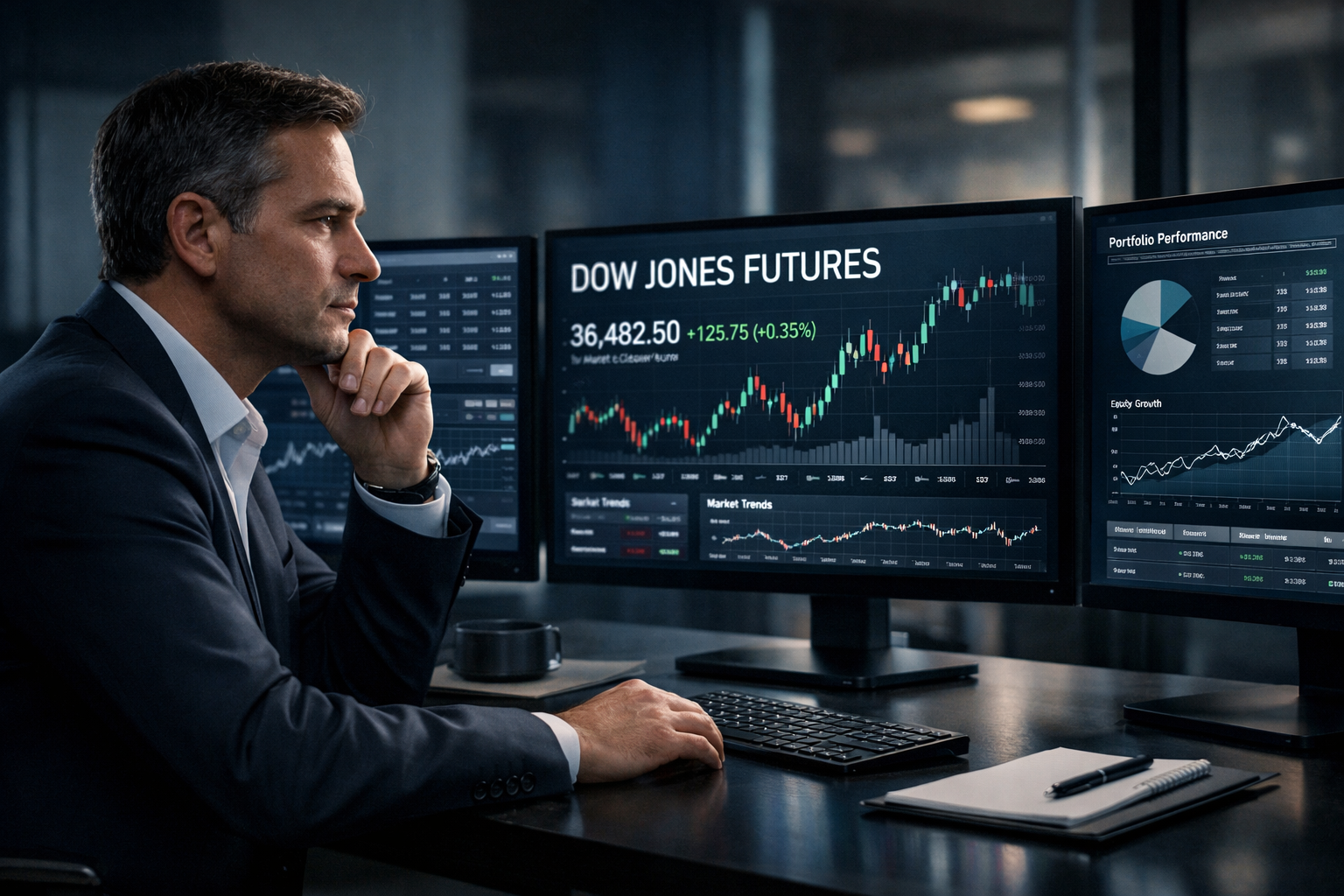
Dow Jones futures shifts stand as one of the earliest and most dynamic indicators of changing market sentiment. For investors committed to disciplined portfolio management, these movements offer a valuable, real-time glimpse into how the market might open and evolve throughout the trading day. Understanding what these futures shifts signal—and just as importantly, what they don’t—can help investors navigate risk and position their portfolios more strategically amid uncertainty.
Before the cash market bell rings, Dow Jones futures reflect a complex interplay of economic expectations, geopolitical developments, and corporate news. These shifts are not mere noise; they often encapsulate collective investor psychology and risk appetite, providing a forward-looking barometer of market direction. Yet, interpreting these signals requires nuance and restraint, as futures can be volatile and occasionally misleading if taken at face value.
Understanding the Nature of Dow Jones Futures Shifts as Market Signals
Dow Jones futures prices are essentially contracts that represent market expectations for the index’s value at a future date. They integrate a wide range of inputs—from economic data releases and earnings reports to geopolitical headlines and overnight developments in global markets. Because futures trade nearly 24/7, they react swiftly to new information, often well before the cash market opens.
This immediacy makes futures a sensitive gauge of investor sentiment. For example, a sudden geopolitical event overseas can trigger a sharp move in futures, signaling heightened risk aversion or uncertainty. However, not every shift carries equal weight. Some fluctuations are simply noise—short-term reactions to headlines that may not translate into sustained market trends.
Distinguishing meaningful signals from transient noise is critical. Investors must consider the context: Is the futures move supported by volume and volatility? Does it align with broader market themes or economic fundamentals? Without this perspective, reacting impulsively to every futures twitch can lead to costly missteps.
What Are Dow Jones Futures and What Do They Actually Show?
Dow Jones futures are derivatives that allow market participants to gain exposure to the expected future value of the Dow Jones Industrial Average. Because they trade outside regular stock-market hours, they can react quickly to economic releases, corporate announcements, geopolitical events, and movements in overseas markets.
However, a futures move should not be interpreted as a guaranteed forecast for the regular trading session. Prices can change significantly before the market opens as new information arrives, liquidity changes, or traders reassess their positions.
For investors, the practical value of Dow Jones futures is therefore mainly contextual. They can help identify whether market sentiment appears stronger or weaker before the opening bell, while the actual portfolio decision should depend on broader evidence and predefined risk rules.
Key Market Signals Embedded in Dow Jones Futures Movements
Certain patterns in Dow Jones futures have historically preceded notable market moves. For instance, sustained futures gains in the pre-market often foreshadow a positive open and potential rally, especially when supported by strong volume. Conversely, sharp, persistent declines in futures can signal an impending correction or increased volatility.
Volume and volatility in futures trading add layers of insight. High volume accompanying a futures move suggests conviction among market participants, while spikes in volatility may indicate nervousness or a shift in risk appetite. These elements help investors gauge whether a futures shift is a fleeting reaction or a harbinger of broader market stress.
Moreover, futures shifts can reveal changes in liquidity conditions. A sudden drop in futures amid thin trading might be less significant than a similar move during heavy volume, which could indicate a genuine shift in investor positioning or sentiment.
Market Signal vs. Market Prediction
One of the most important distinctions when using Dow Jones futures is the difference between a market signal and a market prediction. A signal provides information that may be relevant to the current market environment; it does not guarantee what will happen next.
For example, futures trading lower before the opening bell may indicate increased risk aversion, but it does not guarantee that stocks will continue falling after the market opens. Similarly, a strong pre-market futures move can reverse when new information enters the market.
Investors should therefore use futures movements to frame questions rather than provide definitive answers. The key questions are whether the move is supported by other markets, whether it persists closer to the open, and whether it materially changes the portfolio’s existing risk profile.
Interpreting Dow Jones Futures Shifts for Portfolio Impact
For disciplined investors, futures movements are a tool—not a trigger. They inform tactical decisions about asset allocation and risk management but should never dictate knee-jerk reactions. When futures signal increased risk, investors might consider hedging strategies, such as options or inverse ETFs, or temporarily reducing equity exposure to protect against downside.
Timing is crucial. Acting too early on a futures signal risks unnecessary trading costs or missed opportunities if the cash market reverses. Conversely, waiting too long can expose portfolios to avoidable losses. The challenge lies in balancing responsiveness with patience—using futures as an early warning system while confirming signals through cash market developments and broader analysis.
A Practical Checklist for Evaluating a Market Signal
Before acting on a futures-based signal, investors should evaluate the quality of the information behind the move. A useful checklist includes:
- What is being tracked? Identify the specific futures contract, timeframe, and size of the move.
- Why is the market moving? Determine whether the change is linked to economic data, earnings, geopolitical news, or another identifiable catalyst.
- Is the move confirmed? Compare futures with other relevant markets, volatility measures, and pre-market activity.
- How is risk controlled? Define position size, exit conditions, and maximum acceptable loss before changing portfolio exposure.
- What would invalidate the signal? Establish what evidence would indicate that the original interpretation is no longer valid.
A reliable market signal should provide context rather than urgency. If a signal encourages immediate action without explaining the underlying conditions or risk controls, investors should treat it with caution.
Realistic Investor Scenario: Responding to a Sudden Dow Jones Futures Drop
Imagine an investor waking up to a sharp overnight drop in Dow Jones futures triggered by escalating geopolitical tensions abroad. The futures are down significantly, and headlines suggest rising uncertainty. The investor feels a surge of anxiety, tempted to liquidate equity holdings immediately to avoid losses.
Yet, a disciplined approach calls for a measured response. The investor first assesses the signal’s strength: Is the futures drop accompanied by heavy volume? Are other markets—such as bonds or commodities—also reacting strongly? What is the broader economic context? Recognizing that futures can overreact to headline risk, the investor decides to review portfolio allocations carefully rather than rush to sell.
After weighing these factors, the investor opts to hedge selectively, perhaps by buying put options or increasing cash reserves, while monitoring the cash market open closely. This approach balances risk management with the recognition that futures shifts are early signals, not definitive market verdicts. The investor avoids the pitfall of panic selling, which could lock in losses prematurely.
Common Mistakes and Misconceptions About Dow Jones Futures Signals
One frequent error is assuming every futures move predicts immediate market direction. Futures can be volatile and influenced by algorithmic trading or thin liquidity, leading to exaggerated moves that reverse quickly once the cash market opens. Overreacting to these shifts often results in unnecessary trading and emotional decision-making.
Another misconception is treating futures as standalone predictors. Without integrating broader market data and fundamental analysis, futures signals can mislead. Confirmation bias also creeps in when investors selectively interpret futures moves to support preconceived views, ignoring contradictory evidence.
Finally, some investors underestimate the timing nuance. Acting on futures signals without patience can mean buying into a dip too early or selling into a temporary panic. Recognizing the limits of futures as predictive tools is essential for maintaining disciplined portfolio management.
Why the Market Open Can Change the Signal
The relationship between futures and the cash market is not static. As the regular trading session approaches, additional orders, liquidity, economic releases, and corporate news can materially change market pricing.
This means a futures move observed several hours before the opening bell may have a different significance by the time the market opens. Investors should avoid assuming that an early move will remain unchanged throughout the pre-market period.
A disciplined process therefore treats the opening bell as a point for reassessment rather than confirmation of a predetermined forecast. Comparing the futures move with actual market breadth, volatility, volume, and sector behavior can provide a more complete picture.
Using Dow Jones Futures Within a Broader Risk Framework
Dow Jones futures should be treated as one input within a broader risk-review process, not as a standalone buy or sell trigger. A futures move can provide useful context about overnight sentiment, but it does not establish that a portfolio should immediately be increased, reduced, hedged, or liquidated.
A stronger process combines futures information with position sizing, portfolio exposure, volatility, liquidity, predefined exit rules, and a clear understanding of what would invalidate the initial interpretation.
The objective is not to predict every market opening. It is to use available information to assess whether the portfolio’s current risk remains appropriate and whether the predefined decision process requires a change.
Practical Takeaways for Investors Monitoring Dow Jones Futures
- View futures shifts as early indicators, not definitive calls. Use them to prepare mentally and tactically, not to trigger immediate portfolio overhauls.
- Assess volume and volatility alongside price moves. These factors help differentiate meaningful signals from noise.
- Combine futures data with broader market and economic analysis. Context is key to interpreting what futures shifts truly imply.
- Develop a clear risk management plan. Decide in advance how you will respond to significant futures moves, including hedging strategies and asset allocation adjustments.
- Maintain discipline and avoid emotional reactions. Futures can provoke anxiety, but measured responses preserve long-term portfolio health.
- Use reliable tools and platforms to track futures in real time. Access to timely data supports informed decision-making.
A well-known episode often referenced in discussions of futures market signals is the 2015 Flash Crash. During this event, abrupt shifts in Dow Jones futures highlighted extreme market volatility and investor sentiment swings before cascading into the cash market. This case underscores the importance of monitoring futures as early warnings and integrating them into a disciplined risk management framework rather than reacting impulsively.
Frequently Asked Questions About Dow Jones Futures Signals
Do Dow Jones futures predict how the stock market will open?
They can provide an indication of pre-market sentiment, but they do not guarantee the direction of the cash market at the open or throughout the trading session.
Why can Dow Jones futures change before the market opens?
Futures can respond to economic data, corporate news, geopolitical events, overseas markets, changes in liquidity, and shifts in investor positioning.
Should investors sell stocks when Dow Jones futures fall sharply?
Not automatically. A sharp futures decline should be evaluated within the context of the investor’s portfolio, risk limits, market conditions, and predefined decision rules.
What should investors check alongside Dow Jones futures?
Useful context can include volatility, trading volume, market breadth, other major indexes, bond markets, sector performance, and the specific catalyst behind the futures move.
Can futures signals be used as a standalone trading strategy?
Relying on futures movements alone can create false signals and unnecessary trading. A more disciplined approach combines futures information with risk controls and a broader decision framework.
Conclusion
Shifts in Dow Jones futures offer a powerful window into evolving market sentiment and risk conditions. Yet their true value lies not in predicting exact market moves but in providing disciplined investors with early, actionable signals. By interpreting these shifts with context, patience, and a clear risk framework, investors can better navigate uncertainty, avoid emotional pitfalls, and position their portfolios thoughtfully.
Ultimately, Dow Jones futures are one of several inputs that, when combined with fundamental and technical analysis, help investors manage risk and seize opportunities amid the market’s inevitable ebbs and flows. Recognizing the limits and strengths of futures signals sharpens decision-making and supports a more resilient investment approach.